+86 178 5514 5298


A kPa bag is a flexible packaging product described by its pressure performance, usually measured in kilopascals. The term may refer to vacuum storage bags, pressure-resistant pouches, or bags tested under controlled compression. Its exact meaning depends on the material, sealing method, and intended application. A clear specification matters more than an attractive product photo.
This guide examines what a kPa bag is and how buyers can assess leading China suppliers. In practical sourcing, supplier quality rarely depends on price alone. Film thickness, seal strength, valve design, leak resistance, and test conditions deserve close attention. A reliable manufacturer should provide material data, sample results, production details, and traceable quality records. Factory audits can also reveal whether equipment and inspection processes match the supplier’s claims.
The phrase “top supplier” should not be accepted without evidence. Rankings change by product type, order volume, customization needs, and export experience. Some companies excel at small prototypes, while others support large, consistent production. A polished website is not proof of technical capability. That is easy to forget.
The following discussion offers a practical framework for comparing Chinese manufacturers. It considers product specifications, communication, quality control, certifications, packaging performance, and after-sales support. Readers should still verify current documents and test samples before committing to a purchase. A careful decision may take longer, but it can prevent costly failures caused by unclear pressure ratings or weak seals.
A kPa bag is usually a flexible storage or packaging bag measured by pressure performance. The term is not a universal product standard. It may describe vacuum strength, pressure resistance, or a factory testing target. Checking the supplier’s specification is essential.
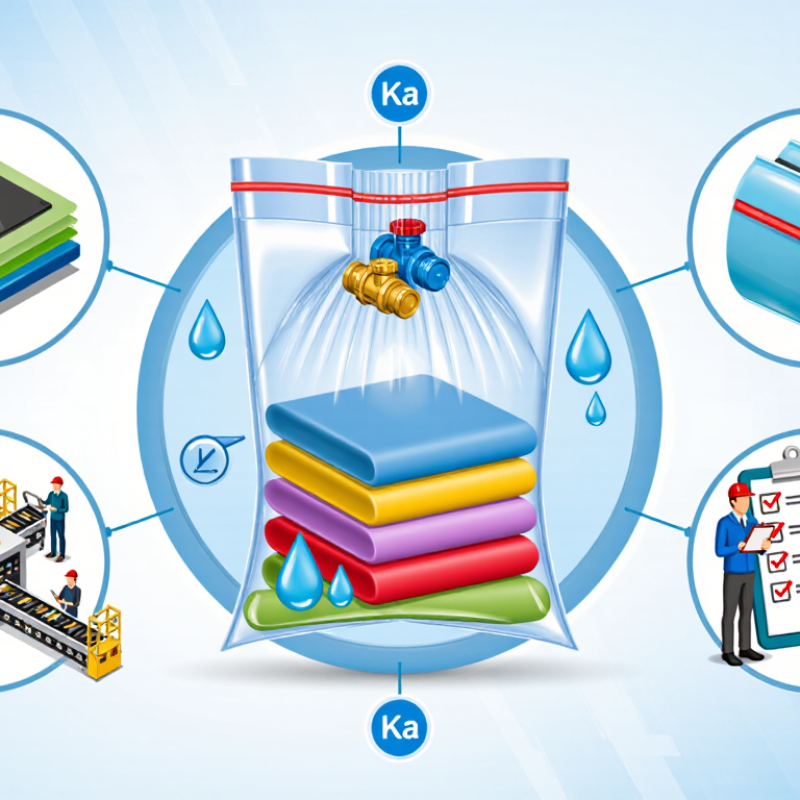
The bag works through controlled air removal. A valve or sealing machine extracts air from inside. Atmospheric pressure then presses the outer film against the contents. This reduces volume and limits exposure to moisture, dust, and oxygen. A strong multilayer film helps maintain the pressure difference. However, the result depends on the seal, valve, material thickness, and product shape. Sharp corners can puncture the film. A perfect seal is not guaranteed.
Tips: Ask for the test method, pressure range, film structure, and leak-testing results. Test a filled sample for 24 to 48 hours. Measure its thickness before and after compression. Do not judge quality from the kPa number alone. In practical use, a lower stated value may still perform better when the seal design is superior. Supplier data can also be incomplete, so independent sampling is worth the extra effort.
A kPa bag is a flexible bag used with vacuum equipment, where pressure is measured in kilopascals (kPa). At sea level, atmospheric pressure is approximately 101.3 kPa. During vacuum packaging, air is removed from the bag and the remaining absolute pressure commonly falls to approximately 20–40 kPa, depending on the equipment, seal quality, bag structure, and product.
A kPa bag is a flexible container described by its pressure resistance in kilopascals. One kPa equals about 0.145 psi. The rating may indicate working pressure, test pressure, or burst pressure, so buyers must ask for the exact definition. This detail is often missed.
Common structures include PA/PE laminates, PET/PE films, aluminum-foil laminates, and coated woven fabrics. PA improves puncture resistance, while PE supports heat sealing and chemical compatibility. Foil blocks light and moisture, but repeated folding can create pinholes. For inflatable designs, TPU or nylon-coated fabric may offer better flexibility. A 2024 Fortune Business Insights report valued the global flexible packaging market at about USD 261 billion in 2023, showing the scale of demand for engineered film structures.
Pressure performance depends on film thickness, seal width, corner geometry, and filling temperature. ASTM D3078 evaluates leaks through bubble emission, while ASTM F1140 measures internal pressurization and burst resistance. These tests do not automatically create one universal kPa class. Therefore, China suppliers should provide material certificates, seal-strength results, pressure-hold data, and sample test records. Smithers’ flexible packaging outlook also highlights lightweighting and downgauging as major industry directions. Thinner films reduce cost, but they can narrow the safety margin. That trade-off deserves practical review. A printed kPa value alone is not enough. Suppliers should state whether the figure is continuous, temporary, or burst pressure, and identify the testing temperature and sample size.
A kPa bag is a flexible bag described by its pressure performance in kilopascals. The term is not perfectly standardized. It may indicate internal pressure, vacuum resistance, burst strength, or a testing condition. Buyers should confirm the exact meaning before comparing suppliers. A reliable supplier should provide material data, seam-strength results, pressure-test methods, and batch traceability.
In industrial settings, these bags can support liquid collection, powder handling, dewatering, and temporary storage. Construction teams may use reinforced versions beside pumps or filtration equipment. Manufacturing plants often select multilayer bags for moisture protection and controlled material transfer. The correct choice depends on temperature, load weight, chemical compatibility, and handling frequency. A small valve, welded seam, or lifting loop can change field performance significantly.
Commercial applications are also broad. Food processors may use approved flexible packaging for dry ingredients or liquid products. Retail warehouses can use protective bags during transport and storage. Medical and laboratory operations require documented materials, clean production, and suitable sterilization compatibility. When evaluating China suppliers, request samples and inspect the seams by hand. Review factory audits, inspection records, and response times. A polished catalog is not enough. A neat specification sheet can still hide a weak seam. I would test the bag under realistic conditions, because laboratory figures do not always match repeated handling.
What Is a kPa Bag and Who Are the Top China Suppliers?
A kPa bag uses kilopascals to describe pressure performance, often during vacuum storage or controlled transport. The number alone proves little. A reliable evaluation should examine film thickness, seal strength, leak resistance, and pressure retention. ISO 11607 requires packaging systems to maintain sterility through handling, storage, and distribution when used for medical products. For general packaging, ASTM D4169 offers structured distribution tests, including vibration, compression, and shock. These tests reveal weaknesses that a factory sample may hide.
China has many capable suppliers, but supplier ranking should follow evidence, not search position. Request batch records, material declarations, and independent laboratory reports. Check whether the manufacturer controls resin sourcing, printing, sealing, and final inspection. OECD’s Global Plastics Outlook reports that packaging represents about 40% of global plastic use. That figure makes material selection and recyclability important, not decorative. A thinner bag may reduce waste, but it can also reduce puncture resistance. This trade-off deserves testing.
Tips: Ask for a pressure-decay test at the claimed kPa level. Test samples after heat aging and repeated opening. Measure ten bags, not one. Confirm migration, heavy-metal, and food-contact documentation when relevant. A certificate can be genuine yet outdated. I would also inspect factory records personally, because paperwork sometimes looks cleaner than production reality. Consider a third-party audit, then repeat testing after any film or sealant change.
What Is a kPa Bag and Who Are the Top China Suppliers?
A kPa bag is packaging designed to manage a specified pressure difference. The term may describe vacuum bags, pressure-resistant pouches, or technical storage bags. Its performance depends on film structure, seal strength, valve design, and testing conditions. A reliable Chinese manufacturer should explain the intended kPa range clearly, not hide behind general claims. Ask for material specifications, dimensional tolerances, leak-test results, and burst-test data. Small details matter.
Choosing the right supplier requires more than comparing unit prices. Review factory experience with similar bag structures and request recent production samples. Check whether the supplier controls film thickness, sealing temperature, and inspection records. Certifications can support credibility, but they do not replace independent testing. Confirm production capacity, minimum order quantity, lead time, and communication quality. Written answers are useful evidence.
Inspect the sample under realistic conditions. Fill it, seal it, stack it, and observe it after storage. A bag that performs well for one hour may fail after several days. No checklist is perfect. I would still leave room for a repeat test, because pressure behavior can change with temperature and handling. The strongest supplier is usually the one that admits design limits, documents corrective actions, and suggests practical improvements without making unsupported promises.
| Evaluation Dimension | Practical Reference | Why It Matters | What to Request from a China Manufacturer |
|---|---|---|---|
| Meaning of kPa | kPa means kilopascal, a metric unit of pressure. 1 kPa equals 1,000 pascals; 100 kPa equals 1 bar. | It provides a consistent way to specify the pressure or vacuum level used with a bag. | Ask the supplier to state whether the rating refers to positive pressure, vacuum pressure, burst pressure, or working pressure. |
| Bag Definition | A “kPa bag” is generally a flexible bag or pouch specified for a particular pressure or vacuum application; kPa describes the operating condition rather than one universal bag type. | The required construction differs for vacuum packaging, inflatable products, laboratory use, industrial storage, and pressure testing. | Provide the application, pressure direction, exposure time, contents, temperature, and required service life. |
| Pressure Specification | A complete specification should include target pressure, maximum working pressure, test pressure, and burst or failure pressure where applicable. | A single kPa number can be misleading if the test method and safety margin are not defined. | Request a pressure-rating table, test method, sample test records, and the proposed safety factor. |
| Common Flexible Materials | Polyethylene, polypropylene, polyamide, polyester-coated fabrics, thermoplastic polyurethane, and multilayer films are commonly selected according to the application. | Material choice affects tensile strength, puncture resistance, chemical compatibility, flexibility, and sealing performance. | Request the exact material grade, thickness or fabric weight, coating details, and material safety documentation. |
| Seam and Seal Construction | Heat sealing, radio-frequency welding, ultrasonic welding, adhesive bonding, or stitched-and-coated seams may be used depending on the material and pressure requirement. | Seams and closures are frequent failure points in flexible pressure products. | Ask for seam width, sealing temperature range, weld-strength results, leak-test criteria, and closure specifications. |
| Size and Capacity | Dimensions, usable volume, fill ratio, and expansion allowance should be defined before production. | Overfilling or excessive stretching can reduce stability and shorten service life. | Submit a dimensioned drawing showing flat size, finished size, internal volume, ports, handles, and tolerance limits. |
| Temperature Range | The allowable range depends on the polymer, coating, seal method, pressure, and duration of exposure. | Heat can soften films and weaken seals, while low temperatures may reduce flexibility and impact resistance. | Request tested operating limits rather than relying only on a general material datasheet. |
| Leak and Pressure Testing | Typical controls include visual inspection, air-leak testing, hydrostatic or pneumatic testing where appropriate, seam testing, and dimensional inspection. | Testing verifies that the finished bag performs as a complete assembly, not just as a raw material. | Specify pressure, hold time, test medium, allowable leakage, sampling plan, and test-report format. |
| Quality Management | A capable factory should maintain documented incoming-material inspection, process control, final inspection, traceability, and corrective-action procedures. | Documented controls reduce variation between batches and improve accountability. | Request the quality manual or audit summary, inspection checklist, batch records, and calibration records for test equipment. |
| Compliance Documentation | Depending on the end use, documentation may include material declarations, food-contact records, chemical-resistance data, transport packaging documents, or product-specific test reports. | Compliance requirements are determined by the destination market and intended use, not simply by the country of manufacture. | Send the destination country, application, and applicable regulatory requirements before requesting a quotation. |
| Customization Capability | Useful capabilities include custom dimensions, fittings, valves, reinforced corners, transparent windows, printing, special films, and low- or high-temperature options. | Customization can improve compatibility, but each added feature may introduce another potential leak or failure point. | Ask for engineering drawings, prototype lead time, tooling charges, sample approval procedures, and change-control terms. |
| Supplier Verification | Verify legal registration, manufacturing address, production equipment, export experience, inspection resources, and the ability to provide references or sample documentation. | Trading capability and manufacturing capability are not always the same. | Request a current business license, factory video or audit, production-flow description, and a signed specification sheet. |
| Sampling and Validation | A production-representative sample should be evaluated for dimensions, pressure retention, leakage, seams, fittings, aging, and actual-use compatibility. | A visual sample alone cannot confirm pressure performance. | Define sample quantity, approval criteria, test ownership, and whether the approved sample becomes the production reference standard. |
| Commercial Terms | Compare minimum order quantity, sample fees, tooling, unit price, packaging, production lead time, payment terms, and shipping terms as one total-cost package. | The lowest unit price may not be the lowest landed cost or the lowest quality risk. | Request a detailed quotation with Incoterms, packaging dimensions, spare-part policy, warranty scope, and replacement conditions. |
| Recommended Selection Method | Shortlist several qualified manufacturers, compare technical compliance first, test samples, audit the preferred source, and use a written purchase specification. | A structured process makes supplier comparisons more objective and reduces the risk of buying an unsuitable pressure bag. | Use a weighted scorecard covering safety, testing, materials, quality systems, customization, delivery, communication, and total cost. |

Note: Pressure ratings and material limits must be confirmed for the specific bag design, test method, contents, temperature, and intended service conditions. The dimensions above are supplier-selection criteria rather than a ranking of named companies or brands.